

Lessons from Solo Travel
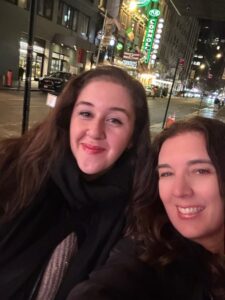 From a young age, I’ve had a deep desire to travel, go to the theater, and see live concerts. Sometimes friends or family could come along, but often they couldn’t—whether from lack of time, money, or interest.
So I made a choice: I wouldn’t miss out just because no one else could join me. Solo travel became my way of life. And what I discovered surprised me. I was never really alone. I always met people, at the theater, in line at a concert, or waiting in a crowd, and those connections always enriched the experience.
One of my favorite examples was a freezing January night in New York City outside the Hudson Theater. I was waiting for Lin-Manuel Miranda to sign an All In playbill, bundled up, half-frozen, but determined. Standing beside me was Aurora, a young woman from Italy traveling solo on her dream trip. Our breath made clouds in the freezing air as we swapped stories of musicals, travels, and life. When she heard I was getting the playbill signed for a friend who had missed it the night before, she smiled and said in Italian, “Good things come to those who wait.” She even let me video her saying it for my friend. A stranger, and yet, in that moment, we were connected.
Following the Joy of Meeting Strangers
The more I traveled solo, the more I noticed that these connections were part of the joy.
Like the night I went to see the ball drop in Times Square on New Year’s Eve, 2019. I ended up shoulder to shoulder for twelve hours with a woman named Caroline and her two sons. She was a pilot who shared her story of breaking into a male-dominated field. Her boys were kind, polite, and curious. We passed the hours playing games, listening to Post Malone and the cast of Jagged Little Pill, and sharing the anticipation of midnight. A crowd of thousands, and yet for those twelve hours, it felt like we were our own small community.
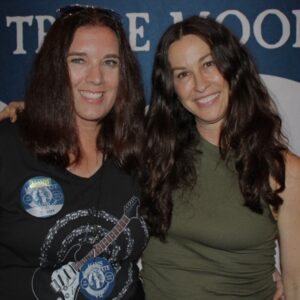 Or the time in 2024 when I splurged on a VIP experience with Alanis Morissette. I met two women there, and we spent hours sharing our love for music before the Encounter with Alanis began. When it was time, we sat cross-legged on a pillow in a room of just twenty fans, Alanis barely two feet away leading a meditation. During the Q&A, I asked Alanis about her song So Unsexy and whether she knew about Internal Family Systems (IFS) when she wrote it. She explained that she’s always understood herself in terms of parts, even before learning the model. She even took a moment to explain it to the group. My therapist part was fan-girling big time. And then her French bulldog puppy waddled in, and I got to play with her. Connection, everywhere. Her husband later shared on Instagram that they named the puppy Baby Blue Luna—a name I loved so much it became a character in my children’s book, The Hallway of Doorknobs.
The Risk That Paid Off
Choosing solo travel wasn’t always easy. At first, it felt risky. What if I was lonely, what if no one talked to me, what if it wasn’t fun?
But the risk paid off. Again and again, I discovered that connectedness happens when we’re open to it. Whether it was Aurora outside the Hudson Theater, Caroline and her sons in Times Square, or fellow fans in an intimate room with Alanis, connection always found me.
The biggest surprise? Solo travel never meant being alone. It meant being willing to step into spaces where connection could appear in unexpected ways.
What IFS Teaches Us About Connectedness
Solo travel became my teacher. It showed me that connectedness isn’t always about who comes with you. It’s also about who you meet along the way. It’s about staying open, curious, and willing to be present.
In Internal Family Systems (IFS), Connectedness is one of the 8 Cs of Self. It’s the reminder that we are all part of something larger, and that healing happens through relationships. Whether it’s a brief encounter with a stranger or the steady presence of trusted people in our lives, connection is always available.
When I travel solo, I feel this truth deeply: we’re never as isolated as we think we are. Healing begins when we notice that every interaction, every exchange, is a thread in the fabric of connection.
The Small Steps of Connectedness
- Saying hello to the person beside you in line.
- Asking a question you’re genuinely curious about.
- Sharing a small piece of your story, and letting someone share theirs.
Why Connectedness Matters in Therapy
In therapy, connection is the container for healing. When clients feel seen, safe, and understood, their inner parts can relax. Connection builds the trust that allows deeper healing work to happen.
A Reflection for Your Journey
Where in your life are you being invited to step into Connectedness—maybe in an unexpected place, or even when you feel like you’re “on your own”?
- When have you experienced an unexpected moment of connection with a stranger?
- How might your protector parts discourage you from reaching out? What are they afraid might happen?
- What is one small step you can take this week to invite more connectedness into your life?
This post is part of my monthly series exploring the 8 Cs of Internal Family Systems, a framework that shapes how I teach, write, and support healing. The 8 Cs are qualities described by Dr. Richard Schwartz, founder of the Internal Family Systems (IFS) model.

- Behind the name: Jack - October 12, 2026
- Behind the name: Sara - October 7, 2026
- Behind the name: Manuel - October 5, 2026
Your post really resonated with me, especially the idea that healing grows out of relational experiences and the sense that we’re not alone. It struck me how powerful it is when someone feels genuinely seen and understood—how protective parts can soften in that kind of safety. It also made me reflect on how difficult connection can feel in environments where we don’t experience that sense of being seen. When authentic understanding is present, it becomes so much easier to open up, trust, and engage in meaningful healing work. Thank you for articulating that so clearly.
Authentic understanding is powerful!
Lynn, this is such a beautiful example of your voice at work. You don’t lecture us about connectedness, you hand us Aurora in the freezing cold, Caroline and her sons in Times Square, a French bulldog named Baby Blue Luna waddling into a room with Alanis. The IFS framework is here, but it never overpowers the humanity of these moments. And I love that the puppy made it into your book. That’s the kind of detail that shows how these connections stay with us and keep weaving into our lives. (Also, I still have that signed playbill. It meant everything.)
Maya~I learned from the best to show not tell 🙂 Thanks for such great feedback about how the writing style is working to help people understand parts through storytelling and human moments. And yay! Glad the playbill has a safe place in the red section!
I deeply resonated with the idea that healing happens through relationships. My current experience of connection has been through the Conscious Girlfriend Academy, which has opened my life to a community of women who truly see and support one another.
This community inspired me to take my first solo trip to New England. Along the way, I connected with the scared part of me that feared flying alone, and in doing so, I discovered a deeper connection within myself. When I arrived, one of my new friends was waiting for me at the airport, and I was able to share my story with her in person.
Through these experiences of connection with others and within myself, I’ve discovered a deeper level of what it feels like to be seen, heard, and understood.
Some of my best experiences and connections have happened because I was brave enough to take that step!
I found healing through connecting with strangers on the west coast. Moving away from my east coast roots allowed me to learn how to heal old wounds. By connecting to others I became aware that in spite of my past wounds I was able to heal. Being open to connecting to others brings the opportunity for healing!
Sometimes removing yourself from situations that keep you stuck is a step towards healing.
I like the distinction you made between being alone and being lonely. I can identify. I have traveled alone and made many friends along the way. I can honestly say the adventure has been worth the risk..
I completely agree Faber. I would have missed so many amazing experiences if I had been too afraid to go alone.