
Stories from My Professional Work: Opening the Door to My Work with Incarcerated Youth
There was a girl on my caseload I’ll call Dee.
She was loud. Sharp. Critical of everything around her. The staff, the program requirements. And especially the food. Every week I met with her and every week she met me with shrugs and “whatevers.” She made it clear there was nothing I could do to get her to participate. Nothing I could offer that was worth her time. Once, I watched her look a staff member dead in the eye and say, “Nobody likes you. You should transfer to another unit.” She didn’t flinch or look away. She seemed like she meant every word.
I knew what that was. I’d seen it before. Prickly on the outside. Spiky enough to make you want to back away.
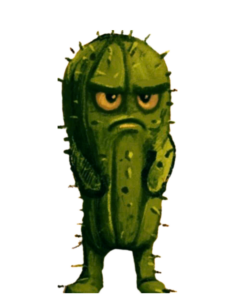
And I admit that it really did work on me at first. Her spikiness stirred something up in me. There was a part of me that wanted to avoid our meetings. I thought about transferring her to another counselor too. I thought, “Should I just give up?” But I knew I couldn’t do that.
So I did my own work. I talked to a colleague. Before each session I took a few minutes to settle myself, to remind my own parts that her sharpness wasn’t personal. It was a protector doing exactly what it was designed to do. Keep people away so she wouldn’t get hurt. I didn’t know to call it parts work then. I just knew I needed to get myself settled before I walked through that door.
Working with my own parts allowed me to see her vulnerabilities and not just her cactus protector. Week after week I chose to stay present, to listen, even when her words were cutting. And slowly, slowly, Dee started to talk. Not just about what she hated. About what had brought her there.
Her cactus protector still showed up. But little by little, she let me glimpse the person it was guarding.
Then came the holiday furlough.
Dee had worked hard to earn it. The chance to go home and see her family. To sleep in her own bed. But as the day got closer, her spikes came out stronger than ever. She was lashing out more, not less. I noticed it. I didn’t say much. I just stayed.
When her mother arrived, I walked Dee to the front office.
Her mother looked at us and said, with a laugh, that it seemed like Dee would rather stay here than come home.
I felt it in the pit of my stomach.
Dee’s face changed. She tried to smooth it over with her mom with right words and smiles. But she looked scared. Sad. Defeated. Her mother’s offhand comment had landed, and we both knew it.
The truth was, her mother was right. Dee did feel safer here. With people who had taken the time to see past her cactus protector. Who had stayed when she pushed. Who hadn’t flinched.
She went home that day. Later she admitted what she already knew. She didn’t feel safe or loved there.
Dee taught me that prickliness always hides vulnerability. Behind every cactus protector is a person hoping, maybe without even knowing it, that someone will stay anyway.
She also taught me something about my own parts. That when I took the time to tend to my own discomfort, my own urge to back away, I created more room for her. More patience. More presence.
Her cactus protector never disappeared. But she let me see what it was guarding.
That was enough.
Reflection Questions
- Think of someone in your life whose prickliness makes you want to pull back. What might their cactus protector be shielding?
- When someone pushes you away, what happens in your own body? What parts of you get activated?
- What would it mean to stay present with someone, or with yourself, just a little longer than feels comfortable?
This post is part of my series, Stories from My Professional Work, exploring protector parts through the lens of Internal Family Systems (IFS). IFS was developed by Dr. Richard Schwartz, whose work continues to shape how I teach, write, and understand the protective parts we all carry.

- Schlow Centre Region Library Meet the Authors Event - October 19, 2026
- Behind the name: Jack - October 12, 2026
- Behind the name: Sara - October 7, 2026
I have a friend that, when I first met her, I was put off by some of the ways she spoke, using words of anger, sometimes swearing at herself and sometimes expressing frustration with others. I felt a little shut down around her initially.
As I kept showing up in the connection over time, I realized and learned that she had a lot of challenges growing up, and sometimes her nervous system meets challenges with a fighter part. When I was able to understand and notice that, something shifted in me. I realized it’s just her survival strategy showing up now. I don’t have to worry that she is going to be mean to me, like a young part of me might think.
I was able to give that part of me reassurance and stay calm, curious, and compassionate toward her. As a result, the relationship has grown into a friendship.
I have met many people like Dee and I appreciate that perspective.
Thanks. I think Lava parts can scare awa many people. It’s easier for me to stay calm and compassionate when I realize it is just the person’s Lava part.